

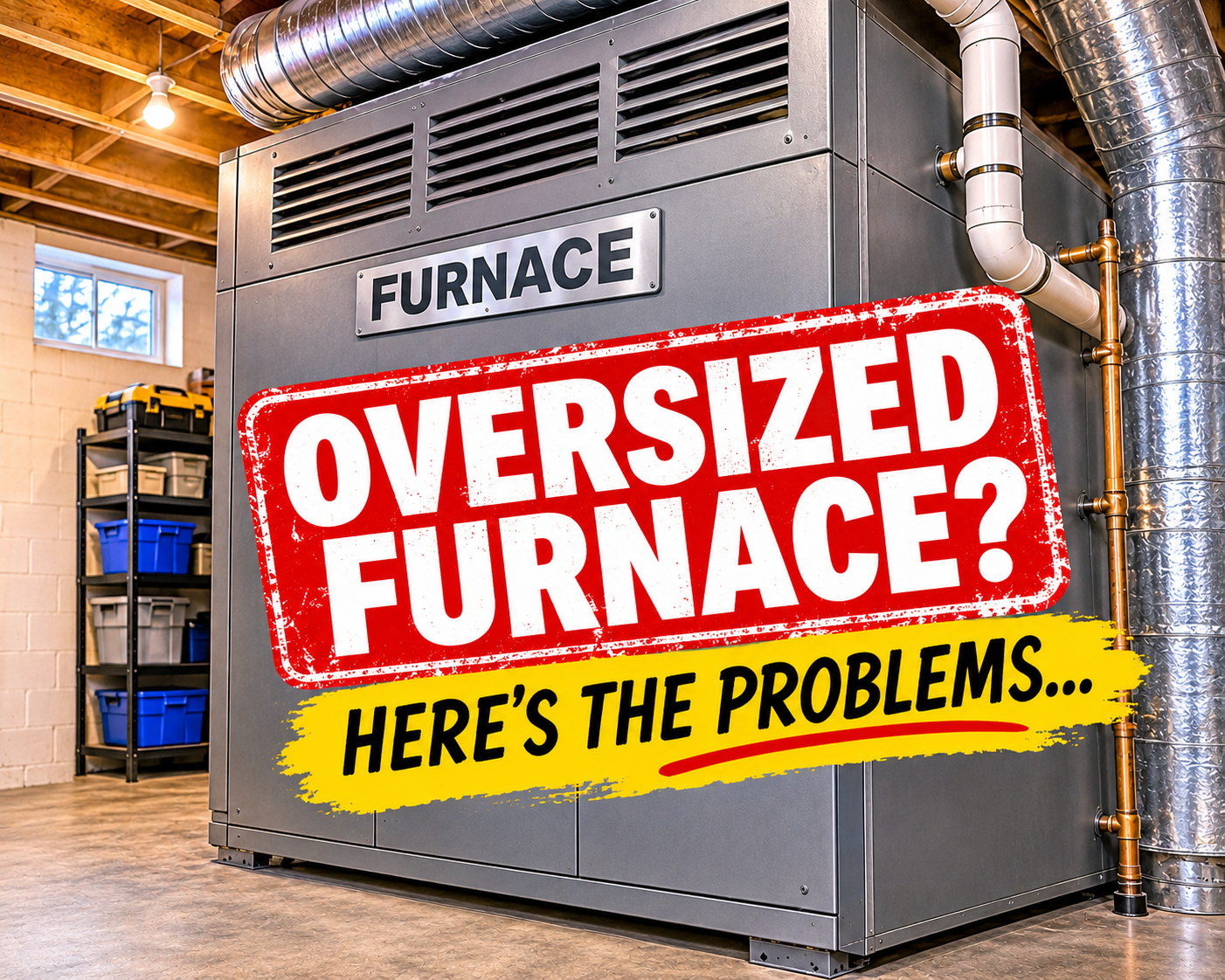
Bigger isn’t always better when it comes to your home’s heating and cooling system. In fact, an HVAC system that is too large for your home can create just as many problems as one that is too small.
At Rostron Premium Home Services, we believe proper equipment sizing is one of the most important parts of installing a new heating and cooling system. It’s not about putting the biggest unit in your home or selling you more equipment than you need. It's about finding the right system for your home, your layout, and your family’s comfort.
Unfortunately, oversized HVAC equipment is something homeowners can run into, especially when replacing an older system. A contractor might assume that installing a larger unit will cool the home faster or provide more heating capacity. But that’s not necessarily how HVAC systems are supposed to work. Let’s look at some of the common problems homeowners may experience when their HVAC equipment is oversized.
10 Problems You Might Notice With an Oversized HVAC System
10. Your air conditioner turns on and off constantly (short cycling)
One of the biggest signs of an oversized air conditioning system is short cycling. When the equipment has too much capacity for the home, it can reach the thermostat’s temperature setting very quickly. Instead of running through a longer, consistent cooling cycle, the system turns on, cools the space, shuts off, and then repeats the process. This constant starting and stopping puts unnecessary stress on the equipment.
9. Your home feels humid even when the AC is running
This is a big one, especially here at the Jersey Shore. Your air conditioner doesn’t just cool your home. It also removes moisture from the air. When an oversized AC system cools the home too quickly, it may shut off before it has enough time to properly remove humidity. You might notice that the thermostat says 72 degrees, but the house still feels sticky, damp, or uncomfortable. Nobody wants their home feeling like a beach house in the middle of July!
8. Higher electric bills
You might think a bigger air conditioner would automatically mean better performance, but that isn’t always the case. Frequent starts and stops, inefficient operating cycles, and unnecessary capacity can all contribute to higher energy consumption. An appropriately sized system is designed to operate more efficiently and maintain a comfortable temperature without constantly cycling.
7. Uneven temperatures throughout the home
Do you have one room that feels like a refrigerator while another room feels completely different? An oversized system can contribute to uneven temperatures, particularly when the ductwork, airflow, or zoning isn’t properly designed. Some rooms may receive too much conditioned air while others struggle to maintain the desired temperature.
6. More wear and tear on your equipment
Your HVAC system is designed to operate through normal heating and cooling cycles.
When equipment constantly starts and stops, it puts additional stress on components such as:
- Compressors
- Blower motors
- Electrical components
- Contactors and relays
- Starting components
Over time, excessive cycling can contribute to premature equipment failures and additional repair costs.
5. Poor indoor air circulation
Longer operating cycles can help circulate and filter the air throughout your home. When an oversized system constantly shuts down, there may be less opportunity for consistent air circulation and filtration. This can affect overall indoor comfort and how effectively your system moves air through the home.
4. Higher upfront installation costs
Bigger equipment can cost more money. If a contractor recommends a larger system than your home actually requires, you could end up paying more for equipment that doesn’t provide any meaningful improvement in comfort. The right equipment should be selected based on the actual heating and cooling requirements of your home.
3. Increased humidity problems during mild weather
Here at the Jersey Shore, we experience plenty of humid days when the outdoor temperature isn’t necessarily extremely hot. An oversized AC system may satisfy the thermostat quickly without running long enough to remove sufficient moisture. This can leave your home feeling uncomfortable even though the temperature appears to be correct.
2. Reduced comfort and temperature consistency
Your thermostat might read 70 degrees, but that doesn’t necessarily mean every room in your home feels comfortable. Oversized equipment can make temperature control more difficult, especially in homes with multiple floors, additions, or different heating and cooling zones. Proper system sizing, airflow, and zoning all play an important role in maintaining consistent comfort.
1. Potentially shorter equipment lifespan
No homeowner wants to replace an expensive heating or cooling system before they have to. While oversized equipment doesn’t automatically mean a shorter lifespan, excessive cycling and additional component stress can contribute to premature wear. Proper sizing and installation can help protect your investment.
Why Does HVAC Equipment Get Oversized in the First Place?
There are several reasons this happens.
- Guesswork: A contractor estimates the equipment size without properly evaluating the home.
- Replacing like for like: The old system was oversized, so the replacement is oversized too.
- Bigger must be better: A homeowner or contractor assumes more capacity automatically means better performance.
- Changes to the home: Additions, insulation improvements, new windows, and renovations can change the home’s heating and cooling requirements.
- Skipping the load calculation: Equipment is selected without performing a proper heating and cooling load calculation.
One of the most important steps before installing new HVAC equipment is performing a proper load calculation.
If you’re considering replacing your HVAC system anywhere in Monmouth or Ocean County, give Rostron Premium Home Services a call. We'd be happy to schedule a free estimate, evaluate your existing system, and discuss the options that make the most sense for your home. We do load calculations too! 732-223-8221 – see you soon!