

Hot water is a vital part of our everyday lives. It keeps us healthy and hygienic. Many homes at the Jersey Shore also use hot water to heat themselves during the winter months. As HVAC professionals, we see all sorts of equipment. There are dozens of types of water heaters and boilers, all offering their own pros and cons.
Check Your Knowledge
Can you match the keyword with the following phrase?
Word Bank:
- Recirculating Pump
- Combi-boiler
- Water Heater
- Indirect Tank
- Tankless Water Heater
Definitions:
- A separate storage unit that uses heat from a boiler to produce domestic hot water
- A unit that produces hot water for sinks or showers
- An eco-friendly device that provides hot water quicker while saving cold water
- A unit that provides hot water for both heating and domestic use, like sinks or showers
- A unit that provides domestic hot water, but doesn’t hold any kind of reserve
*SCROLL DOWN FOR THE ANSWERS*
The Water Heater: A Wonderful Invention
Domestic hot water was once considered a modern luxury, believe it or not. Before that, indoor plumbing was also considered lavish. Now, it’s hard to imagine a life without them.
As technology moves forward, the world has seen a number of advancements within these everyday devices. When it comes to water heaters, there have been quite a few ways they’ve changed over the years.
Gas Versus Electric
Electric water heaters were once created because of noise concerns with natural gas and oil-burning units. Now, they are offered to homes that may not have natural gas run to them.
Atmospheric Versus Power Vented
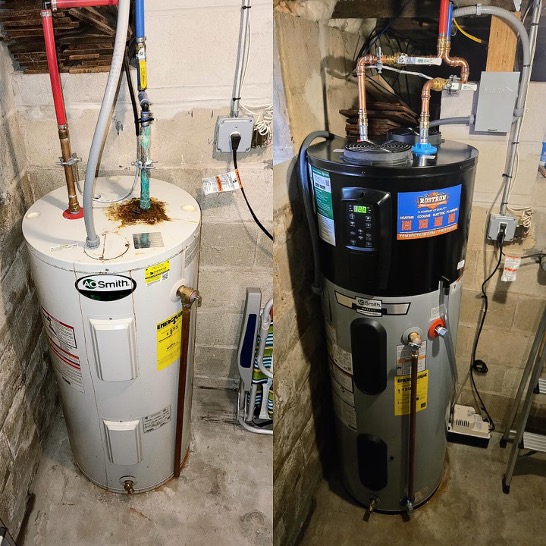
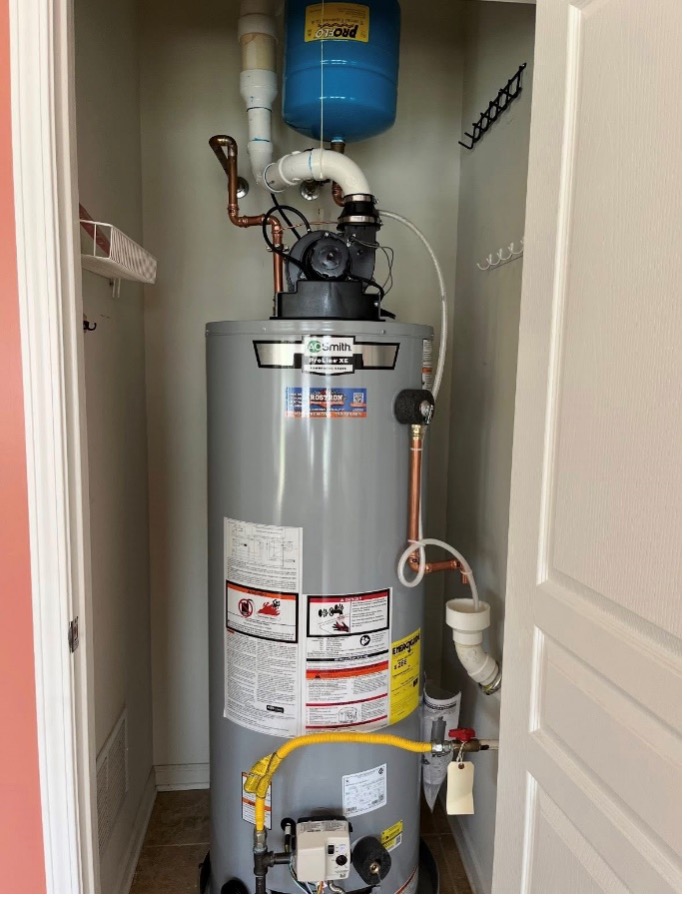
Atmospheric water heaters use the concept that heat rises to exhaust the fumes created when the water is heated by natural gas. Power vented units were created as a more efficient alternative, using a powered fan to exhaust the unit. Power vented units are also more versatile because they can be vented horizontally and don’t rely on a chimney. (Bonus!) Check out this Power Vented BEFORE & AFTER:
Tanked Versus Tankless
It may seem fairly self-explanatory, but these units are very different. For one, tanked units have a large cylindrical tank that holds water that is heated or partially heated. That’s so you won’t run out of hot water during your shower!
Tankless units work similarly, but don’t hold any water. Rather, they just heat the water as you need it. It is important to note that tankless units get much hotter than tanked units, and can require more maintenance because of it. Regular checkups are important for all the equipment in your home, but tankless water heaters especially!
What Exactly is a Boiler?
A boiler is a type of heating system that uses hot water loops to heat your home, either through baseboard, radiators, or even radiant loops in your floor! Keep in mind, though, not all homes have boilers. Your home could have a furnace or even a heat pump.
Standard Versus Combi
A standard boiler only provides heat for your home. Although it does heat up water, it is generally a closed loop system. The water that runs through your boiler does not come through showers or sinks, which is an important distinction.
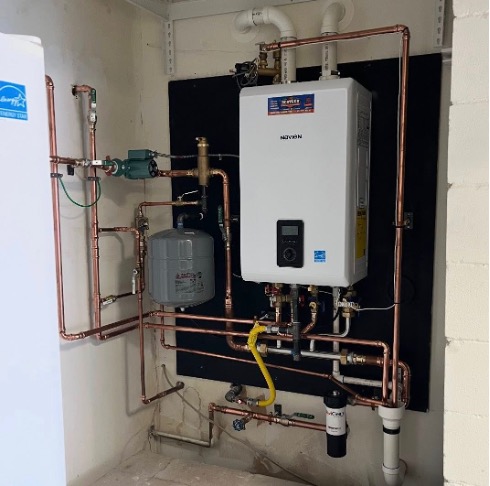
Combi-boilers provide both heat and domestic hot water for your home. Keep in mind, though, the water used for heat will not touch the water that is used in sinks or showers. They are entirely separate!
But what about Indirect Water Heaters?
An indirect water heater is a unit similar to a tanked water heater. It has a similar shape and produces domestic water. The biggest difference, though, is that they don’t use electricity or natural gas to heat their contents. Rather, a nearby boiler sends hot water to the unit, heating up the water inside. Keep in mind, the boiler is not heating up the water that you use throughout your home, but heats the water that transfers heat to the domestic water within the tank.
Quiz Answers
(A, 3) Recirculating Pump – An eco-friendly device that provides hot water quicker while saving cold water
(B, 4) Combi-boiler – A unit that provides hot water for both heating and domestic use, like sinks or showers
(C, 2) Water Heater – A unit that produces hot water for sinks or showers
(D, 1) Indirect Tank – A separate storage unit that uses heat from a boiler to produce domestic hot water
(E, 5) Tankless Water Heater – A unit that provides domestic hot water, but doesn’t hold any kind of reserve
What are you most excited about this Fall? Pumpkin pies, the holidays, or something else?
Rostron Premium Home Services are always available for any HVAC, plumbing, or electrical project you are working on. Give our office a call at 732-374-9949 to schedule an appointment!