

It’s cold outside and we’re about to be in the thick of another New Jersey winter. I live in Wall Township, and this is my second winter in my recently purchased home—and I have the pleasure of experiencing radiant heat. At first, it felt a little strange stepping out of the shower onto warm tile floors, but now it’s nothing short of a luxury. It’s one of those comforts you don’t fully appreciate until you live with it, and once you do, there’s no going back.
But like any heating solution, radiant heat has pros and cons. It’s important to weigh these carefully when deciding if it’s right for your home.
Pros of Radiant Heat:
-
Even Heat Distribution
Radiant heat provides consistent warmth, unlike forced-air systems that can create hot and cold spots. This means that there’s no cold room or toasty room. Everyone in the house is comfortable, which is why radiant heat is one of the best heating systems. If you’re considering investing in radiant floor heating, this is a major positive.
-
Energy Efficiency
Radiant floor heating is often more energy-efficient because it doesn’t rely on heating the air, which can escape through windows and doors. This is why we often see radiant floor heating in new construction since that is increasingly a focus of homeowners.
-
Silent Operation
There’s no groaning radiator here. Radiant heat systems work quietly, without the noise of blowing air or mechanical fans. If ambiance is important to you, the quiet of radiant heating is a unique luxury feature you should consider.
-
Allergy-Friendly
Hypo-allergenic is a major pro on the pros and cons list of radiant heating. Since there’s no air movement, radiant heat reduces the circulation of dust and allergens. With more and more folks discovering allergens all around them, making heating an allergy-free experience is just one way to improve your home life.
Cons of Radiant Heat:
-
High Installation Costs in Older Homes
One primary disadvantage is the high installation cost, particularly in retrofitting an existing home. For new construction, radiant floor heating can be incorporated more easily, but for older homes, it requires lifting the floor to install the system, which can be time-consuming and costly.
-
Slow to Warm Up
Depending on the system, radiant floors can take a while to heat up, which can be a disadvantage if you’re looking for instant warmth. It’s something to consider and plan for when you’re discussing the pros and cons of radiant floor heating.
-
Repair Difficulty
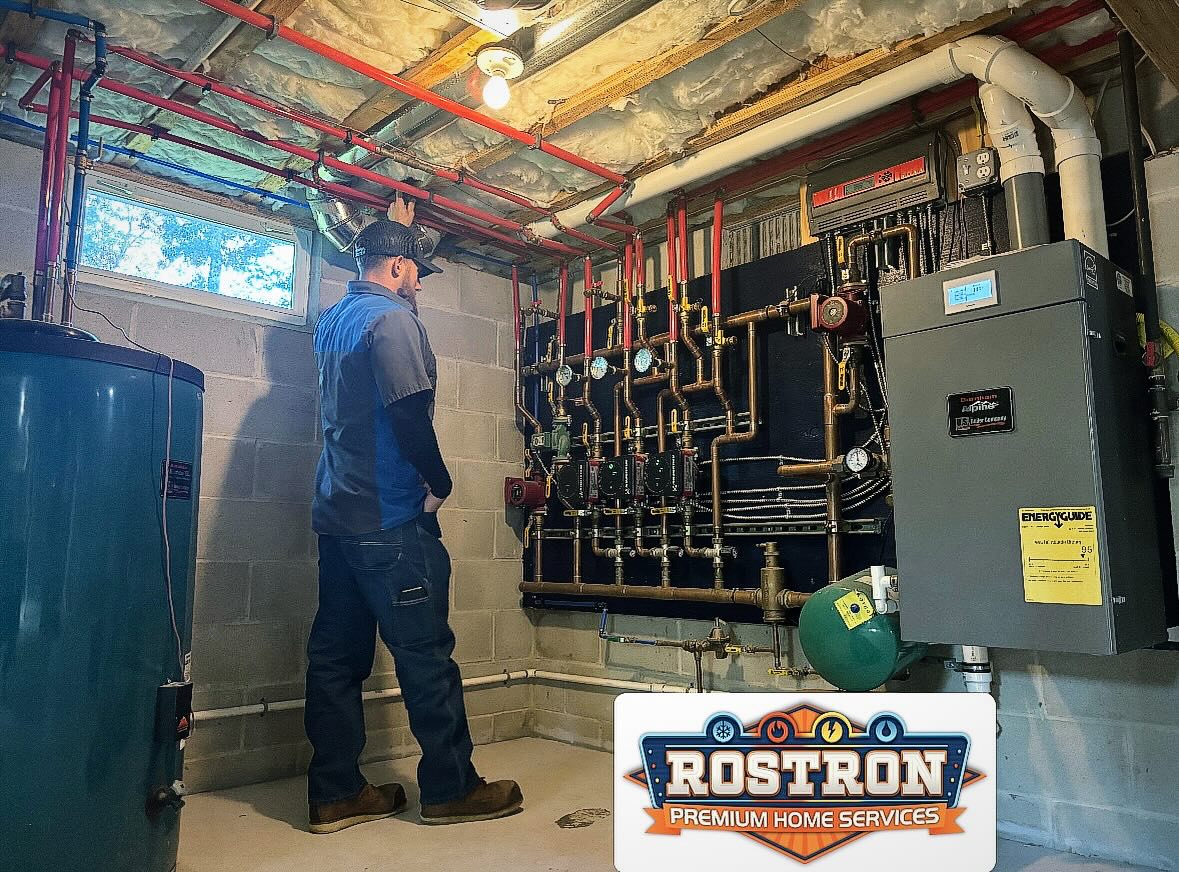
Knowing how to repair radiant floor heating is important if you’re considering this heating style. Repairing this sort of system can be challenging because it is located beneath the floor and requires some degree of dismantling to access it. This can be planned for so that you are not shocked or disappointed when repair time comes around. Radiant heat is often heated by a boiler. Rostron Premium Home Service technicians are some of the best hydronic technicians at the Jersey Shore.
-
Flooring Materials
Ceramic tiles and stone floors are excellent heat conductors. Some types of carpeting and hardwood may not transfer heat as effectively, limiting flooring choices or reducing system efficiency.
Want to learn more about radiant heat, or maybe you need some repairs on your current heating system. Give us a call today! 732-374-9949. Rostron Premium Home Services has a PREMIUM reputation for a reason. A COMPANY OF QUALITY!