

If you haven’t already turned on your AC to start cooling your Jersey Shore home, you’ll likely do so within the next few weeks. Forecasts are predicting these warm, open-the-window temperatures are not here to stay and the New Jersey summer is well on its way.
Ever wonder how well you know your AC system?
Check out these major components and terms that are important to your HVAC system, as well as a quick explanation of each and some common issues we see throughout the season!
#7: CENTRAL AIR
By definition, central air uses a central system to provide your Jersey Shore home with cooling, delivering it through ductwork. Other options for AC are mini splits, PTAC or window units. All will give you the same end goal, but most will have their own pros and cons, leading to better applications for
each. For example, Cape Cod-style homes are common within Monmouth and Ocean Counties and will leave some HVAC providers scratching their heads. “Where can we put the ductwork?” For Rostron Premium Home Services and other HVAC professionals, ductless mini splits might be the go-to!
#6: COIL
Air conditioning wouldn’t be possible without the indoor coil, also known as the evaporator coil. This component absorbs the heat in your ductwork and forces it into the refrigerant, turning it from a liquid to a gas. When you first run your AC system for the season, unpleasant odors can occur and will
originate from the coil. Wherever you live, from Long Branch to Point Pleasant, frozen coils are a common issue with any AC system. If you find yourself in a pickle with a coil frozen in a block of ice, check out this awesome guide:
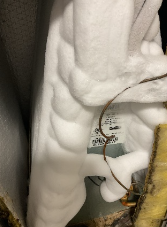
#5: CABINET SIZE
A term you are likely unfamiliar with, the cabinet size is a standardized dimension among HVAC manufacturers, allowing combability between varying furnaces, coils, and air handlers. For most residential purposes, A-Cabinet, B-Cabinet, and C-Cabinet are common. Although, there is a also a D-
Cabinet option. Regardless of whether you have a Daikin, Lennox, Rheem, or something else entirely, it’s important to match the cabinet dimensions as well as the ductwork sizing and filter track. This will allow for proper airflow for better efficient and increased comfort.
#4: CONDENSATE PUMP
Heat is often trapped within moisture, which is why your AC system also works as a natural dehumidifier. When your coil pulls heat from the air in the ducts, it often comes across something it’s not designed to deal with: condensation. The excess water is drained from the unit, either using gravity or the condensate pump. If your system is located in a basement, below the main sewer line in your home, or has a far distance to the nearest drain, your system might use a condensate pump to send it up and away. With the proper safety measures in place, your condensate drain might leave your Jersey Shore home with a frightening issue, like no air conditioning or a blank thermostat. Although, this is just a quick fix and will often protect your home from water damage.
#3: CONDENSER
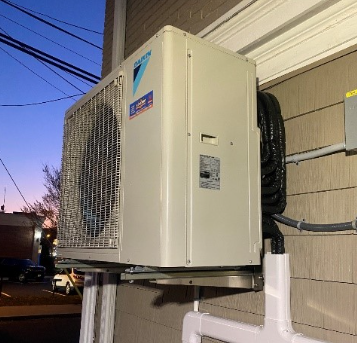
If your home’s AC system was cast in a movie, the condenser would be the well-known star of the show. This is the outdoor unit, usually a large square or cylinder with a fan inside, that expels heat outside. The refrigerant runs through each of the fins, releasing the heat into the outdoor air. The condenser is a
general term that includes a number of other components, including the capacitor and compressor (see below). Condensers are rarely replaced on their own, as they work very closely with the coil and require proper compatibility between refrigerant and levels of communication. Although family-owned, local companies like Rostron Premium Home Services have found themselves replacing condensers on occasion. For example, a customer in Belmar needed to have their new condenser, installed just months before, replaced due to a tree falling and crushing the unit!
#2: COMPRESSOR
The word might seem scary and overwhelming, but this component actually does exactly what you think it would. The process is a little more complicated, but the compressor forces air particles together, compressing them to release the heat between them and turning the refrigerant from a gas to a liquid.
Being the heart of your condenser, you can imagine that the compressor is a very expensive component to replace. Failure of your compressor will result in a full breakdown of your AC unit and will require a labor-intensive process to replace. For most Jersey Shore homeowners, the option to replace the entire AC system can come into play, depending on age and history of problems in the past
#1: CAPACITOR
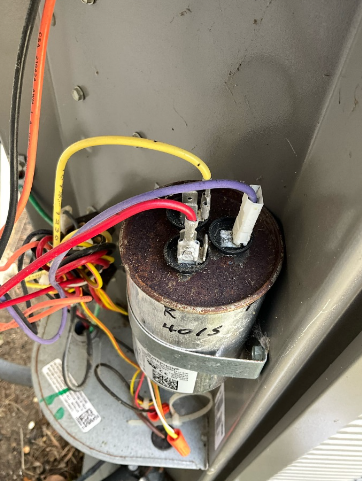
These small, often battery-looking components in your condenser will hold a small amount of electric charge. When the thermostat calls for the unit to turn on, the capacitor is responsible for giving it a little extra kick, if need be. It can also keep the flow of electricity to the compressor consistent. This is important to keep the system running smoothly. Learn more about capacitors:
Capacitors are parts that are considered wear-and-tear. For most condensers, they are accessible and designed to be easily replaced.
WE PUT THE ‘C’ IN HVAC!
Blank thermostat in Asbury Park? Frozen coil in Manasquan? Warm air from vents in Farmingdale? Rostron Premium Home Services provides cooling, heating, plumbing, and electric services to Monmouth and Ocean Counties in New Jersey. Whether you’re having an issue or looking to replace your existing system, give us a call at 732-223-8221 or fill out a form, right here on our website!