

When homeowners in Monmouth and Ocean County start shopping for a new air conditioning system, SEER rating tends to come up early in the conversation. It’s on every spec sheet, salespeople mention it, and it sounds like something that should matter. But what does it actually mean, and how much should it factor into your decision?
What SEER Means
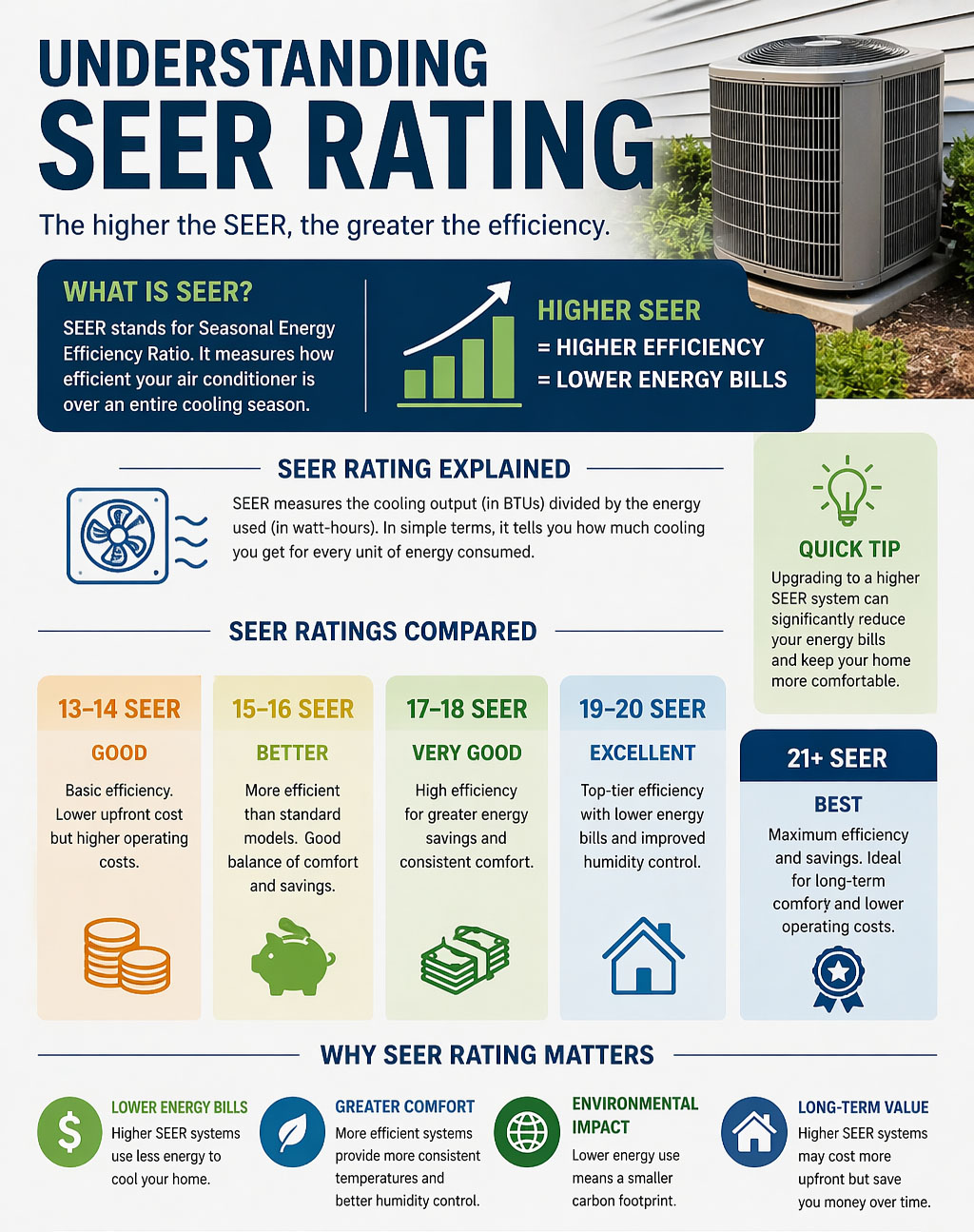
SEER stands for Seasonal Energy Efficiency Ratio. It measures how efficiently an air conditioner converts electricity into cooling over the course of a typical cooling season. A higher SEER rating means the system does more cooling work per dollar of electricity spent. Think of it like miles per gallon for your car. A higher number is more efficient, which translates to lower monthly utility bills.
As of recent federal standards, new residential AC systems must meet a minimum SEER2 rating. The SEER2 scale is slightly different from the older SEER scale due to updated testing conditions, but the concept is the same. When you’re comparing systems, make sure you’re comparing the same scale. Our air conditioning team walks through this during every estimate so there’s no confusion between options.
Why It Matters More at the Jersey Shore
In a climate where you only run the AC for two months a year, the efficiency gain from a premium system may take a long time to offset its higher cost. At the Jersey Shore, that calculation looks different. Systems here run heavily from mid-May through September, sometimes longer. High heat and high humidity mean long run times. Over the course of a season, the energy savings from a more efficient system can be meaningful.
Where the Returns Diminish
Moving from a 14 SEER system to a 16 SEER system produces a noticeable efficiency gain. Moving from a 20 SEER to a 22 SEER is a much smaller jump in real-world savings, and the price premium for those top-tier units can be significant. Unless you’re planning to stay in the home for many years, the math doesn’t always favor the highest-efficiency option available.
What Else Comes with Higher SEER Systems
In most cases, higher SEER systems are also variable-speed systems. Variable-speed equipment doesn’t just switch on and off at full blast. It ramps up and down to match the actual demand in your home. This has two benefits that matter a lot at the Jersey Shore. First, it dramatically improves humidity control, which is just as important as temperature on a muggy August afternoon. Second, it runs quieter and more consistently, which most homeowners prefer once they experience it.
The Practical Takeaway
SEER rating matters, but it’s one factor among several. Proper sizing, quality installation, and the right equipment for your specific home and usage patterns matter just as much. A high-SEER system that’s improperly sized or poorly installed will underperform a properly installed system with a lower rating every single time.
When you sit down with one of our project managers, we’ll walk through the options that make sense for your home. To get started, visit our request a quote page or call Rostron Premium Home Services at 732-374-9949. We serve all of Monmouth and Ocean County, New Jersey.